LivingKiosk
← All displays

Heartbeat 3000

Your vitals as a late-night broadcast. Heartbeat 3000 takes the data your Apple Watch already collects and plays it back as a mid-80s scope terminal — phosphor green on black glass, four panels on a twelve-second rotation, a ticker along the bottom. It is meant to be seen from across the room, not read.
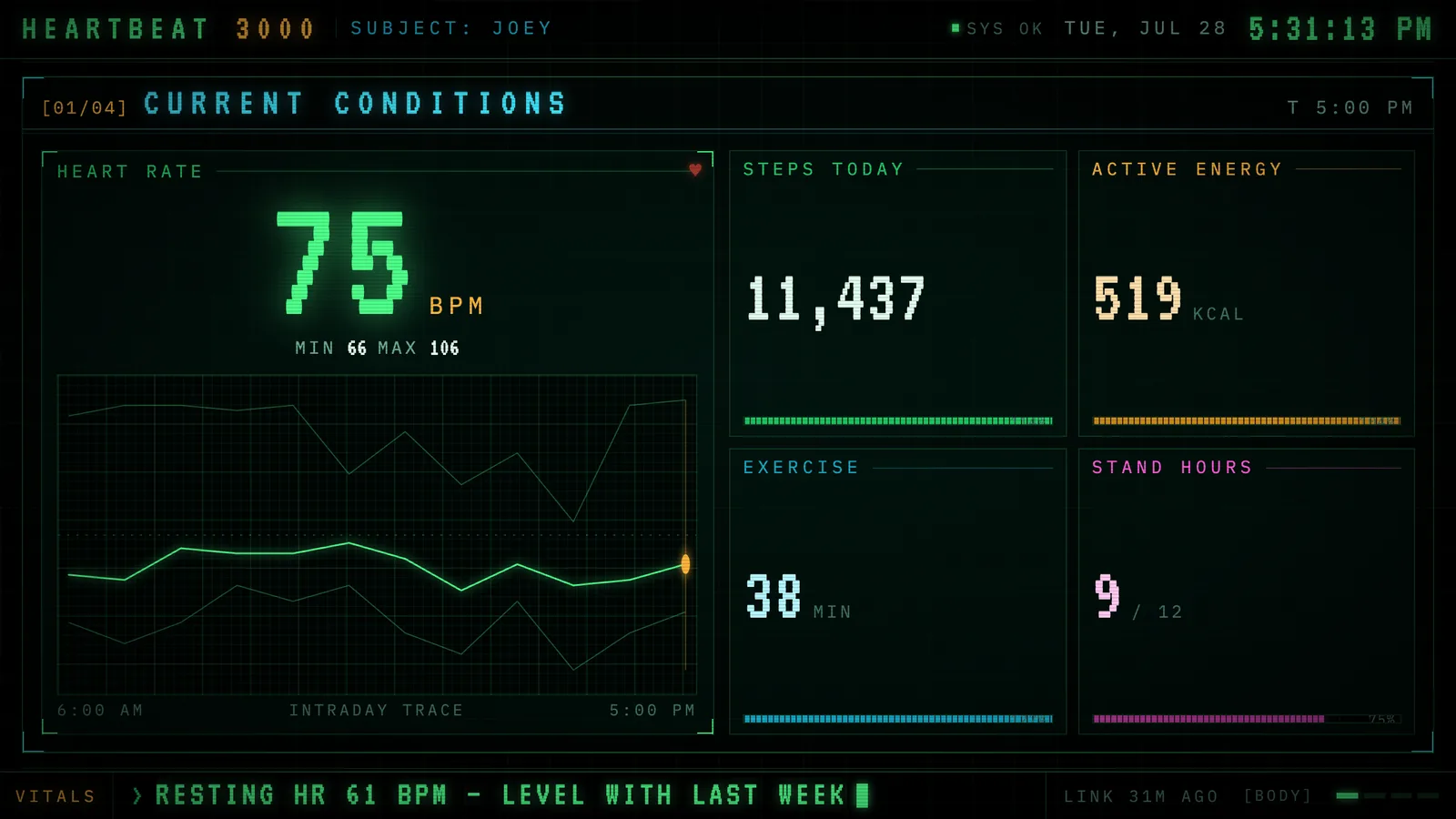
Current conditions panel: a large 75 BPM readout in phosphor green beside an intraday heart rate trace, with steps, active energy, exercise minutes and stand hours.
Current conditionsLive heart rate, today’s intraday trace, rings.
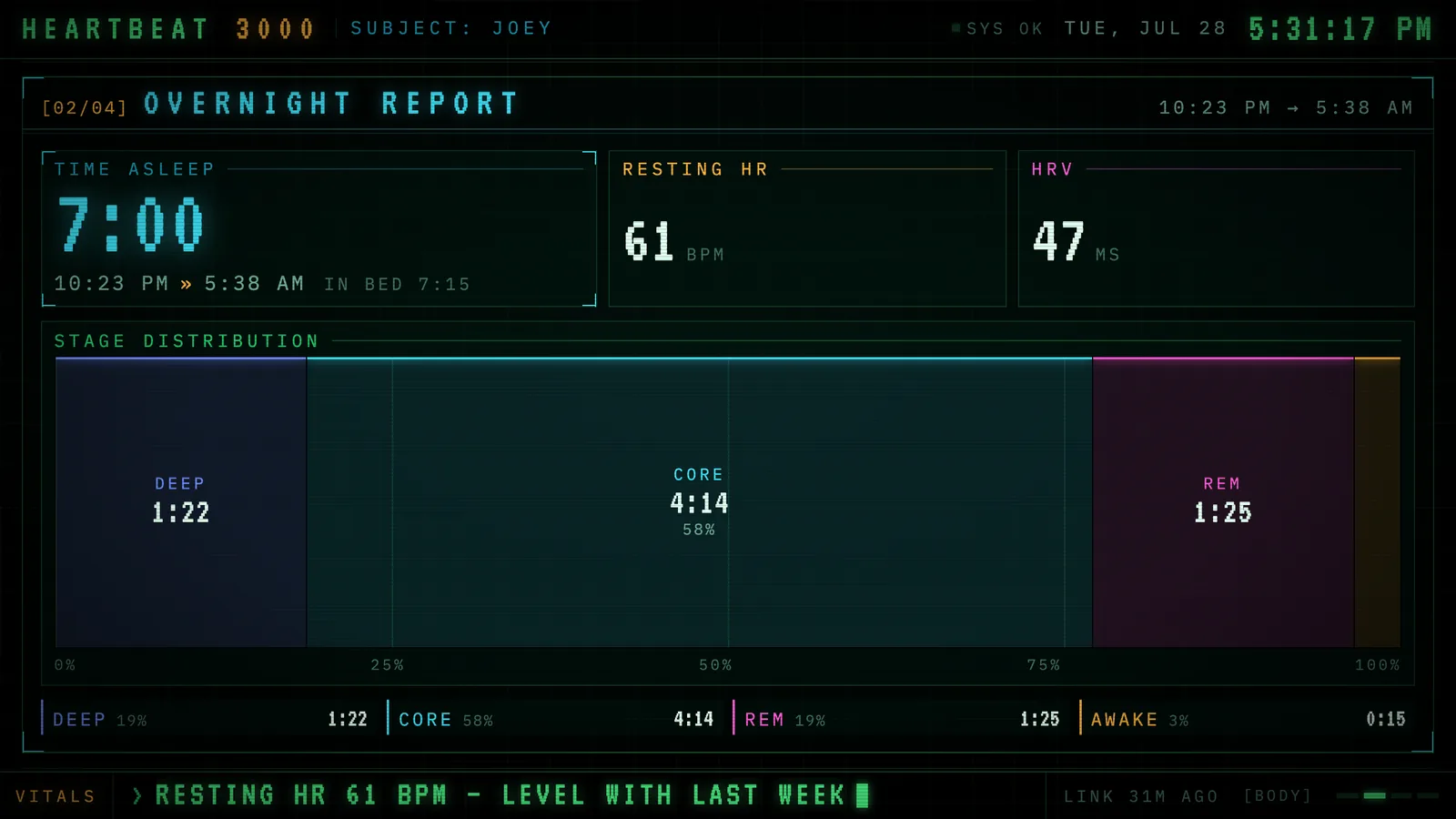
Overnight report panel: time asleep, resting heart rate and HRV above a stacked deep, core, REM and awake sleep stage bar.
Overnight reportLast night: time asleep, stages, resting HR, HRV.
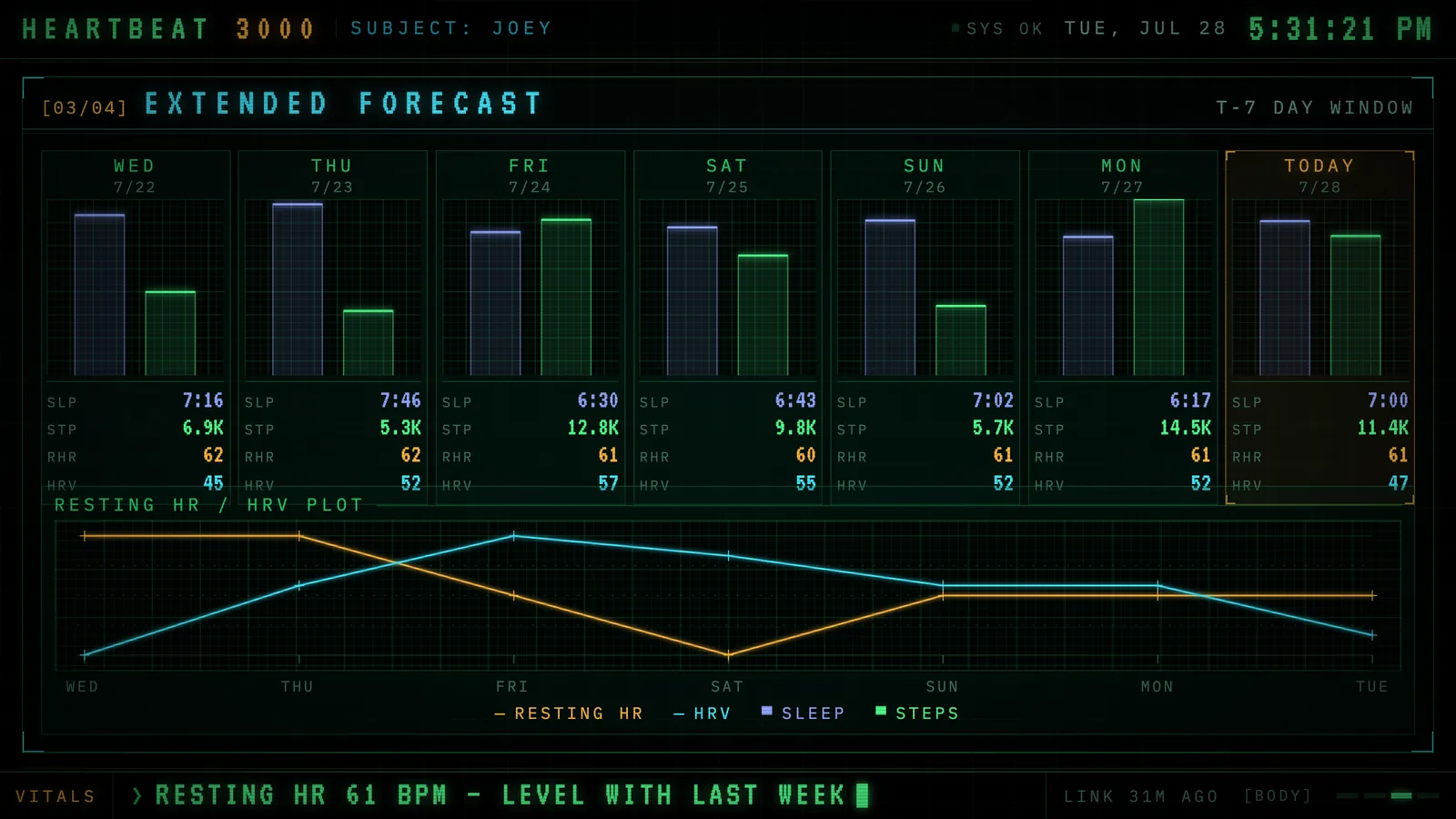
Extended forecast panel: one column per day for the last week with sleep and step bars, plus resting heart rate and HRV trend lines.
Extended forecastSeven days of sleep, steps, and trend lines.
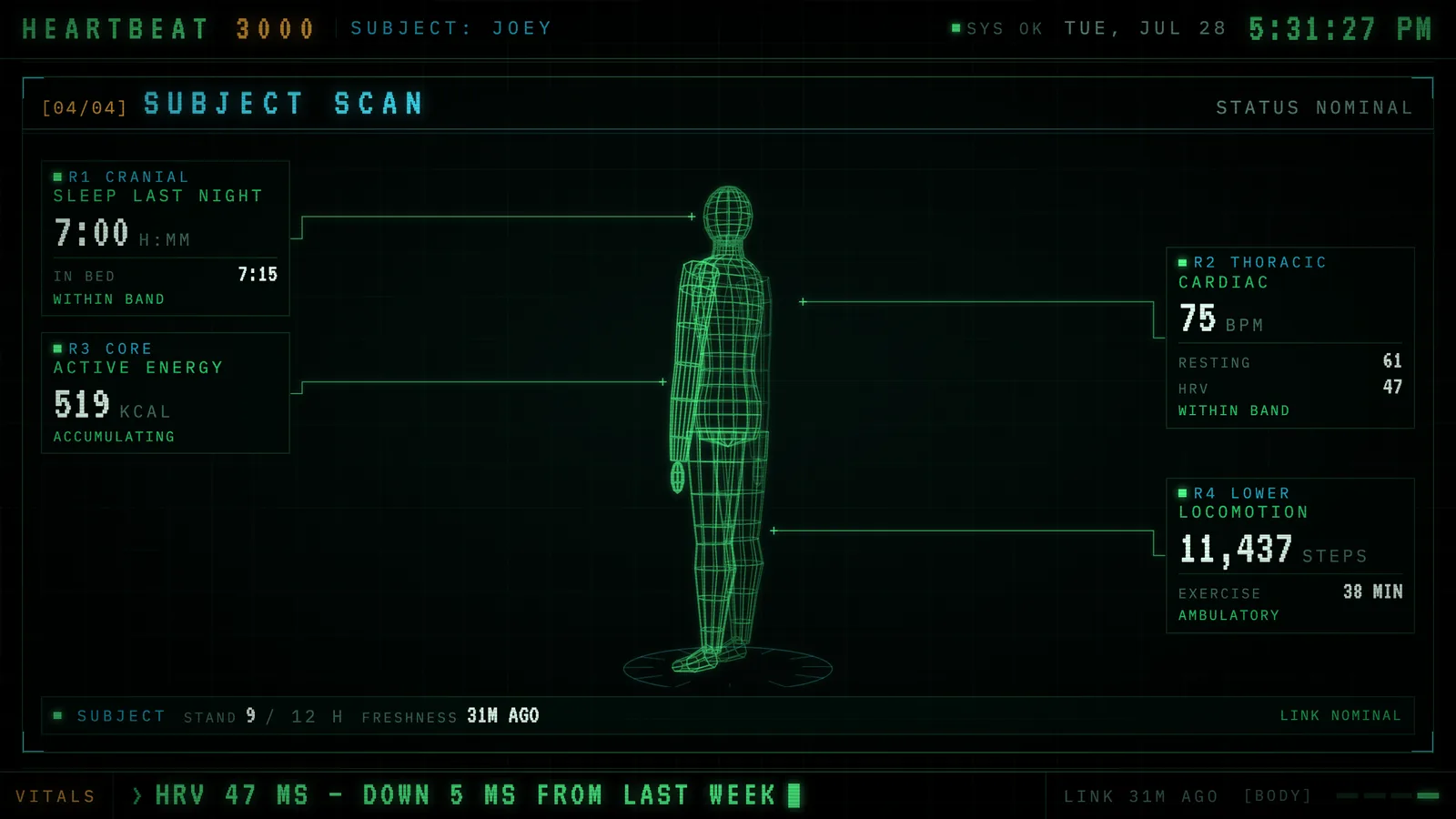
Subject scan panel: a green wireframe human figure rotating on a turntable with bracketed callouts to cranial, thoracic, core and lower-body readings.
Subject scanA wireframe body on a turntable, annotated per region.

Where the data comes from

Health Auto Export on iOS posts your Apple Watch metrics on a schedule. Heartbeat stores them and draws from its own copy — nothing is pulled from a third party while the display is up.

Where it runs

Self-hosted, single container, one SQLite file. It sits on your own machine or server; your health data never leaves it.

What it wants

A 16:9 screen you are not otherwise using. It scales as one unit, so it reads the same on a 5K monitor and a wall-mounted tablet.